President Donald Trump, in recent days, has been doubling down on his promise to give each of us $5,000 if his Republican Party maintains its hold on both chambers of Congress in next month’s general elections. As I explained on Saturday on Times Radio for the British audience, this payout would add $1 trillion to the U.S. national debt and further exacerbate inflation, thus Republican lawmakers are not going to eagerly embrace any such legislation. They probably do not have to worry about defying a wrathful executive on this because polls are showing not only is it probable that the Democrats will gain control of the House of Representatives, but there are indications the opposition party could also capture a majority in the Senate. Since both the House and the Senate would have to approve the president’s payout plan, it is a promise unlikely to be fulfilled. But is it legal to even offer such an inducement? If you are offering it to the entire electorate, yes. However, if you are trying to buy the ballots of individual voters, no.
Federal law, specifically 18 U.S.C. § 597, makes it a crime to offer or make a payment to a specific individual in exchange for their vote or agreement to withhold their vote. Keep in mind, this strictly covers private quid pro quo transactions for individual ballots.
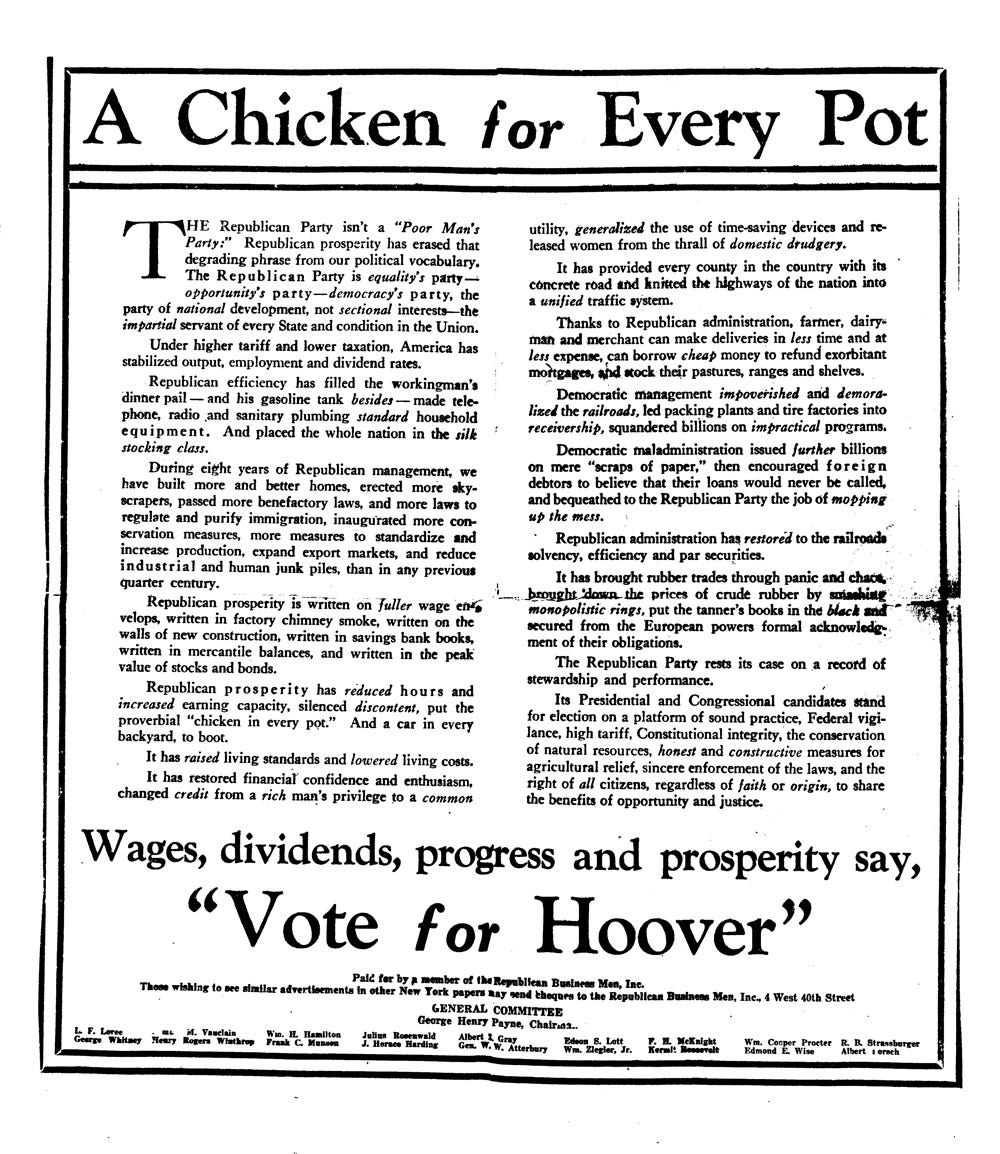
From George Washington buying beer, rum, wine and brandy for voters to the famous 1928 “A Chicken for Every Pot” slogan of the Herbert Hoover campaign, American candidates have walked the fine line between persuading voters and improperly influencing them. (I delved into one of the wackiest state-level campaigns recently about a huckster who tried to become Nevada’s governor).
In the latest episode of our radio show/podcast, America at 250: Due Dilgience, two experts join me and Bill Bernardoni to discuss this.
Historian Andrew W. Robertson traces how American elections evolved from public voting, treating and political spectacle to secret ballots, political parties and modern election safeguards. Then, UCLA election law expert Professor Richard Hasen examines where the law draws the line today between vote buying and campaign promises — including what happens when a candidate promises voters a direct financial benefit.
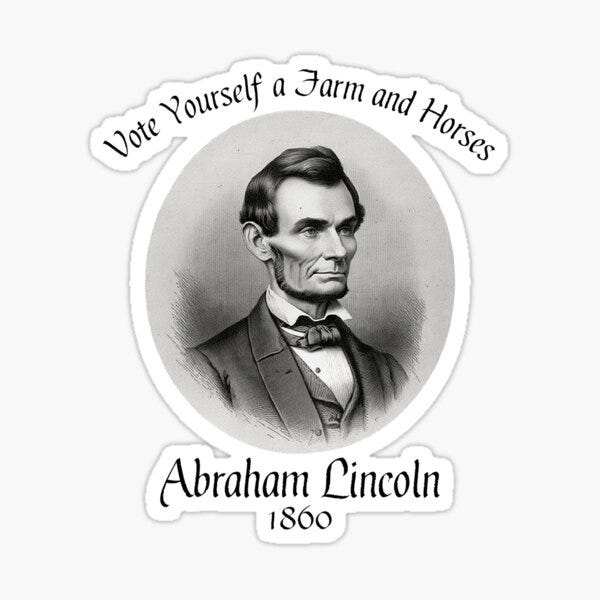
This the real payoff from our discussion: Americans have been offered enticements for their political support for more than 200 years and the distinction between a political promise and an illegal inducement still matters.
America at 250: Due Diligence airs on nearly 90 radio stations in the United States, including WRCT FM 88.3 Pittsburgh (Wednesdays 10am); KVOI AM 1030 Tucson (Sundays 6am); WVOG AM 600 New Orleans (Sundays 9am): KSLM AM 1220/FM 104.3 Salem, Oregon (Saturdays at noon); WMQM AM 1600 Memphis (Thursdays 5pm); WITA AM 1490 Knoxville (Saturdays 1pm); WUMS FM 92.1 Oxford, Mississippi (Sundays 9am) and there are multiple Radio Free America™ transmissions throughout every weekend via WRMI in Florida, the largest commercial shortwave broadcaster in the Western Hemisphere.
Funding for the show comes from civic-minded individual contributors to the Jordan Center of Journalism Advocacy and Innovation and the support of the School of Journalism and New Media at the University of Mississippi. The program is distributed via the Talk Media Network, Public Radio Exchange and the Radio Free America™ project. If you like what we’re doing with the radio show and podcast, we would appreciate your grassroots support by clicking here.