

Megawatts vs. Megahertz
Live sports are disappearing behind pricey paywalls. I decided to try to pull them out of thin air instead.

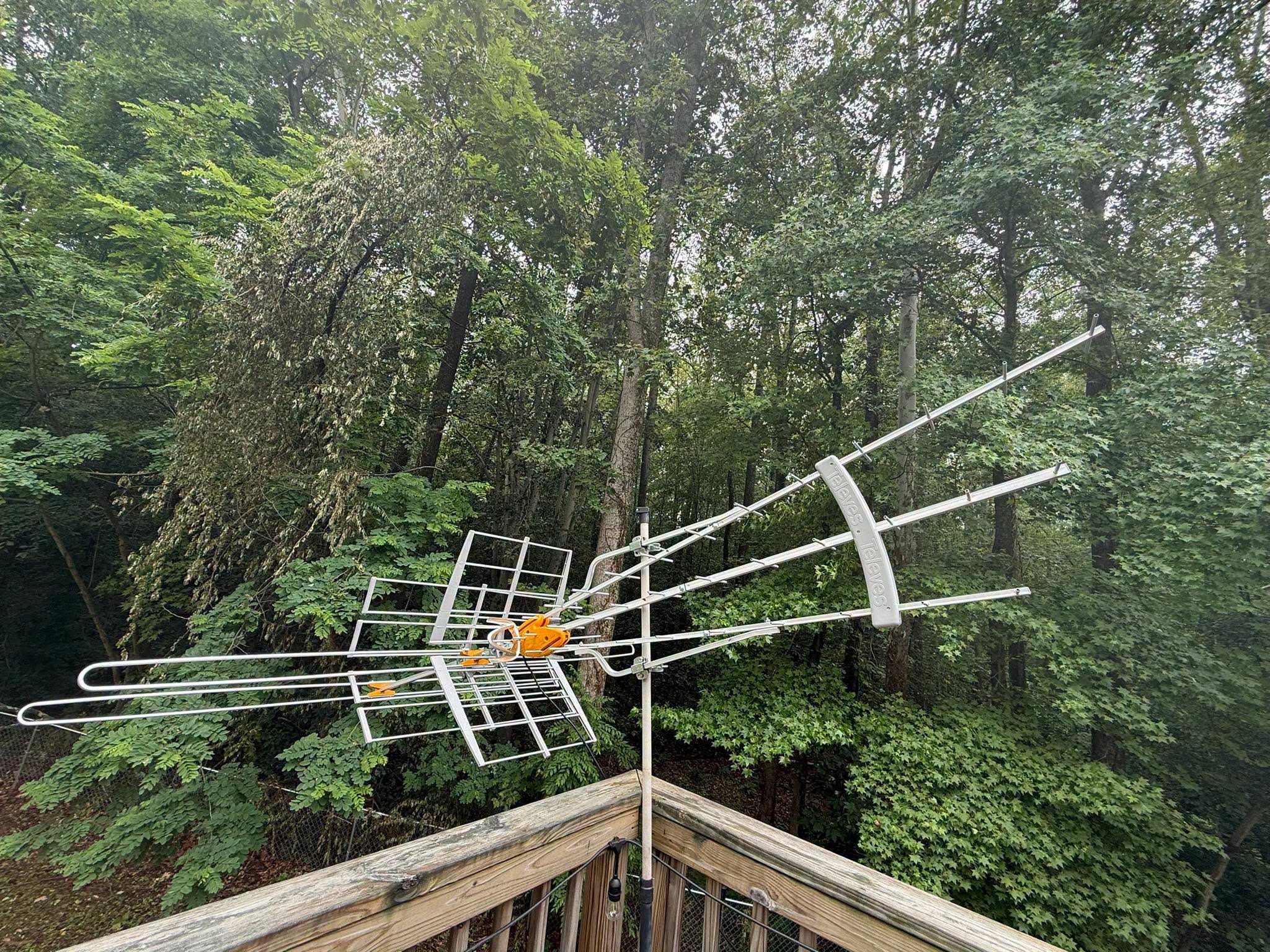
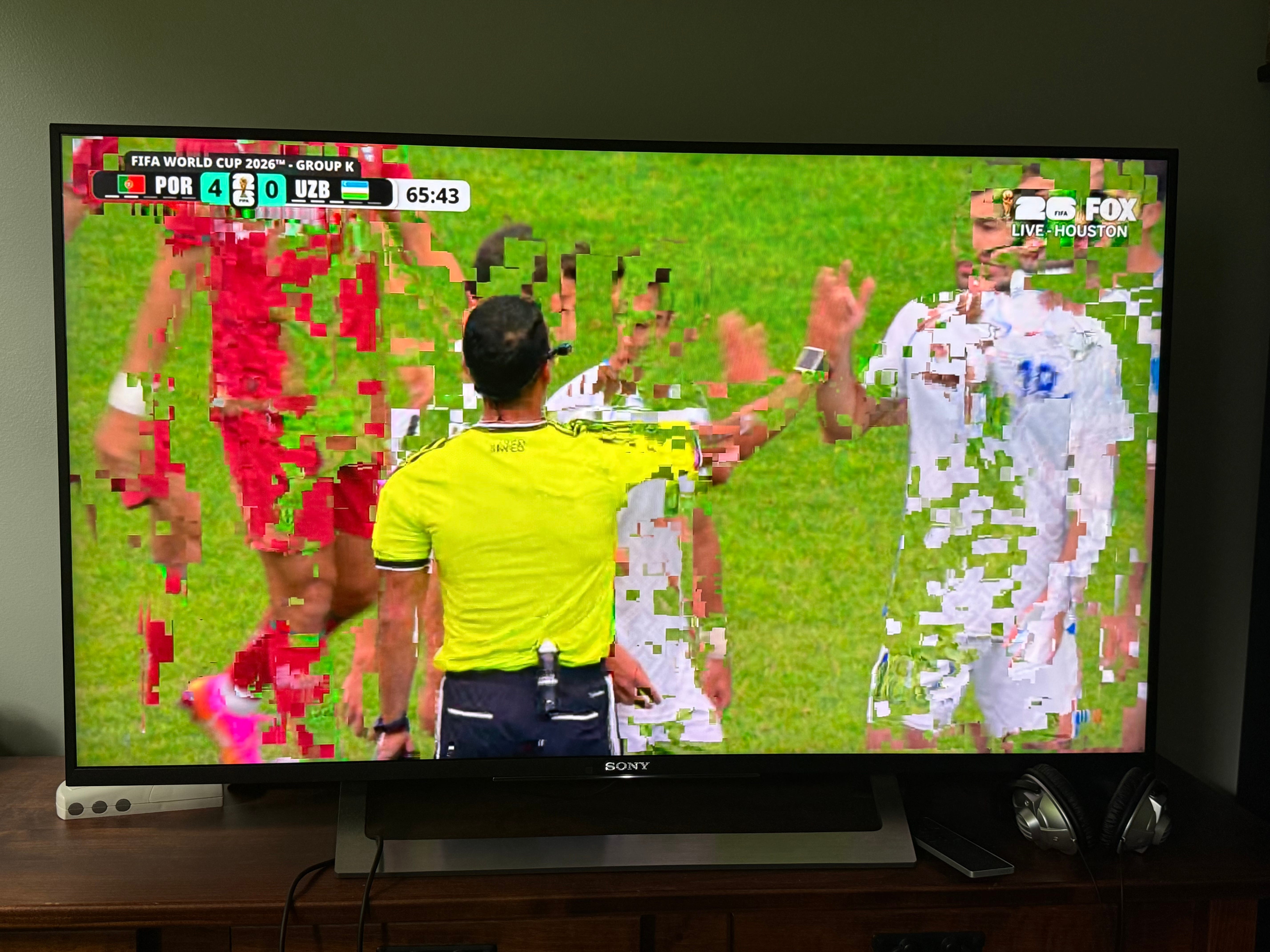
It took me a few hours to assemble this beast in an attempt to get a pixelation free over-the-air reception of World Cup games.
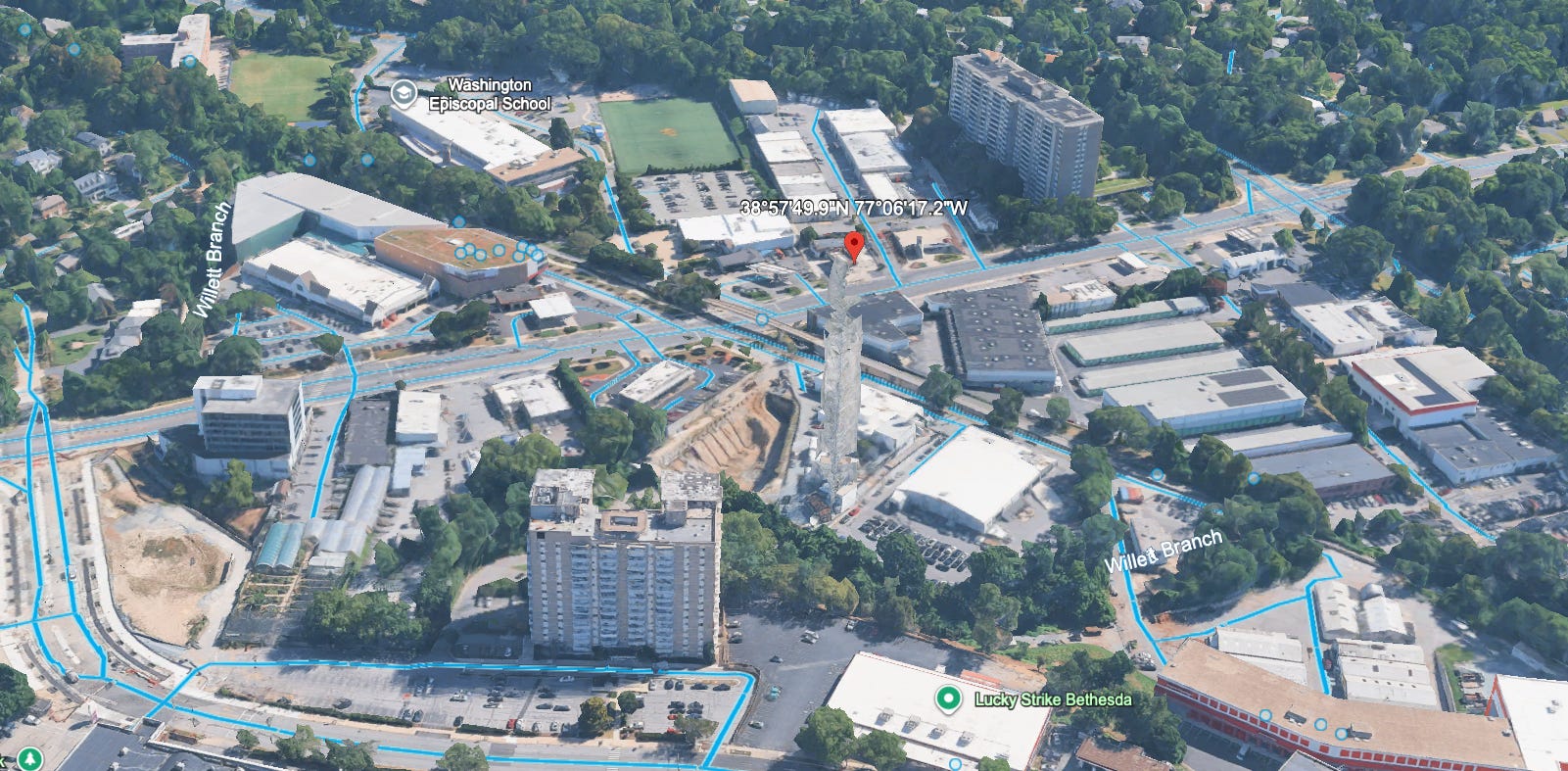
The desired reception target, on a NNE compass bearing mapped on a straight line, is 63 kilometers (39 miles) away — the 215-meter high tower in Bethesda, Maryland, from which WTTG sends out a one megawatt (effective radiated power) signal in the 600 MHz band. My elevation is about 38 meters (125 feet) HAAT which is really not high enough for the goal (no pun intended) because of the curvature of the Earth and multiple ridges between my house in Stafford County, Virginia, and southern Montgomery County in Maryland.
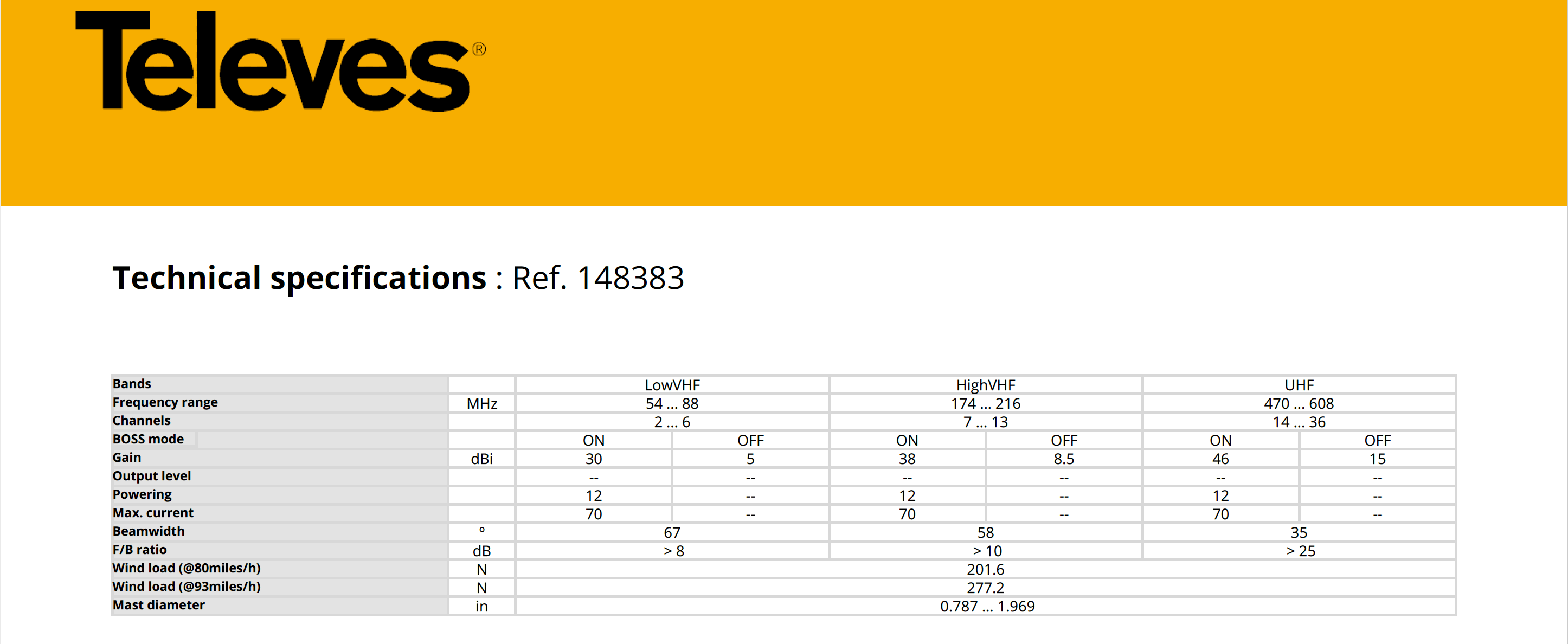
In the analog days on much lower frequencies it would have been easy to get at least a slightly snowy picture but with digital it boils down to ones and zeroes, i.e. all or nothing. Televes claims its best antenna has 31 dBi gain for reception on the desired UHF channel, but physics demands that I further elevate the antenna for a reliable picture. (There’s a handy formula for this: 𝜈=ℎ2𝜆1𝑑1+1𝑑2)
After a few days of testing, I have noticed that the WTTG (aka Fox 5) video pixelates more in the daytime than after sunset.
My semi-educated guess is a regular temperature inversion is at play. At night the broadcast signal curves slightly over ridges, hills and the horizon, bringing a strong, pixelation-free picture. Solar heat destroys the inversion and the signal during the daytime resumes its normal, straight line-of-sight path and that, unfortunately, means it shoots straight into the ridges or over my antenna.
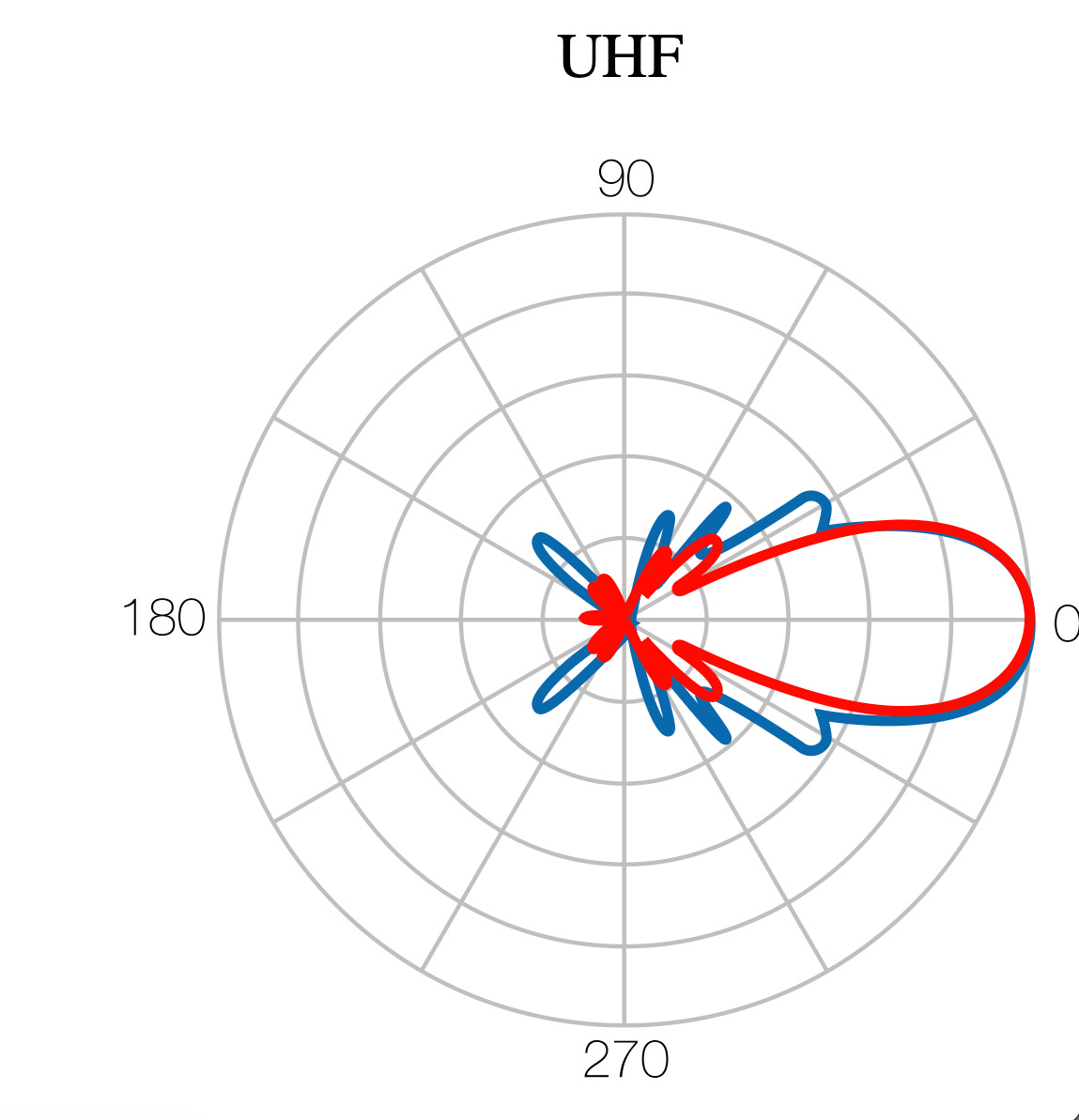
It is also possible that during the day there are more aircraft in the path. A big flying object could cause brief multi-path interference which briefly tears apart the received video image. I queried Gemini AI about this and it did not respond with laughter and insults but rather helpfully generated a simulation.
My caveat is these are unproven theories. I report sometimes about science, but am not a scientist, only a certified amateur radio licensee (W7DQ) with the stress on amateur.
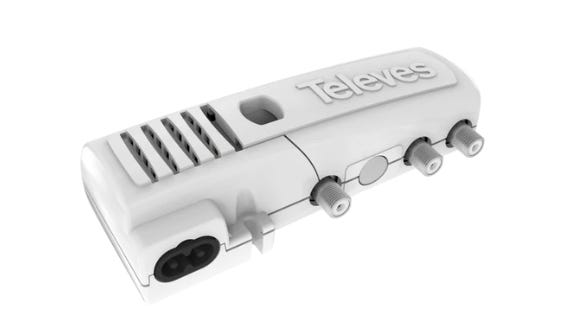
Another factor could be interference from 5G cellular just adjacent to the frequencies used by WTTG. The included Televes Datboss LTE/5G filter is supposed to compensate for this while the preamplifier does its magic.
Yes, I know I am spending a lot of time and effort when I could plunk down $20 for a Fox One subscription and cancel it after the World Cup is over. I do have limited access to Peacock (under NBCUniversal), which its owner, Comcast, has given me as a perk as part of my Xfinity internet service. It works fine on my cell phone but rejects access on my internet-connected TV set, presumably because that is on my Verizon Fios wi-fi connection. (Yes, I have two different ISPs for my primary residence).
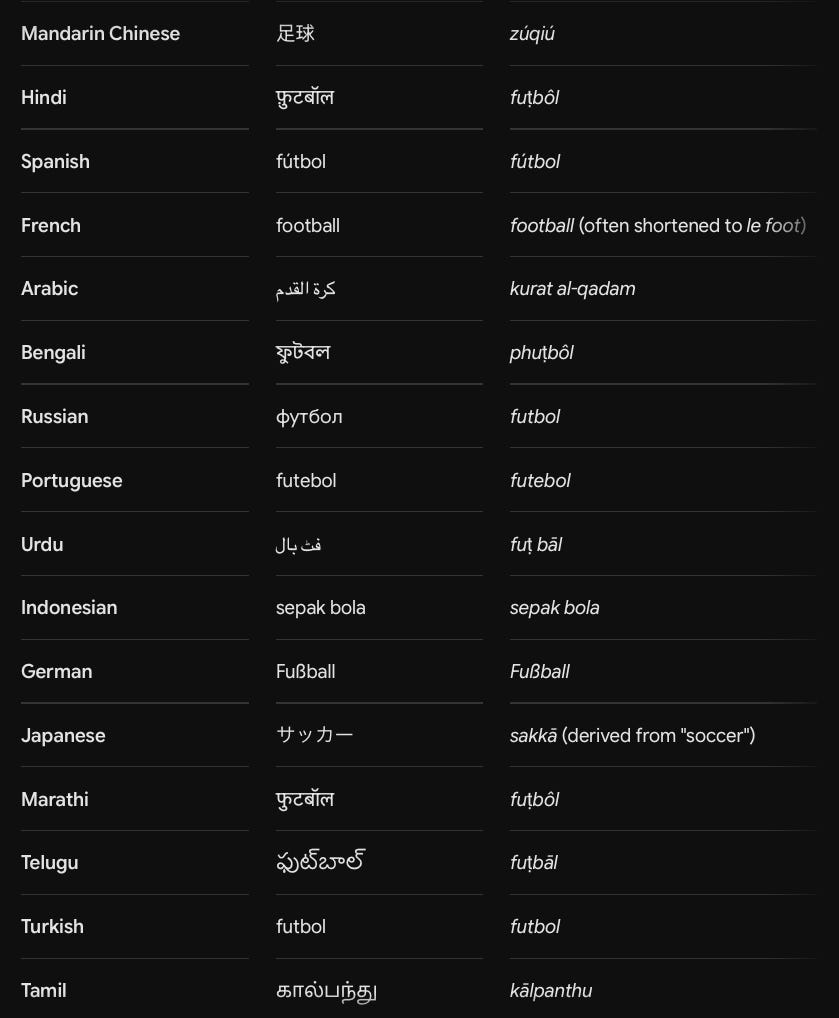
Peacock carries most of the World Cup matches on Telemundo and I prefer the star-studded team of Spanish-language announcers over the Anglo-American commentary on Fox as it’s jarring to hear the word “soccer” during the World Cup. For Team USA it might be “soccer,” but for every other team, except the Japanese, on the pitch here this month it is some variation of “football.”
I can sometimes get the Telemundo stream from my iPhone to hand off to the TV set and, voilà, mission accomplished.
The Televes antenna will have to go higher. I am sensible enough at my age (in the zone between maturity and doddering) not to carry a large and unwieldy object across my steep roof and I do not want any friends or neighbors doing that either. Just as the number of professional transmission tower climbers has dwindled in recent decades it is difficult to find anyone whose livelihood is erecting rooftop residential antennas or satellite dishes as most households have switched to cable TV or the internet, if they even still watch television at home. Diehards over the age of 21 who want to see the action on a big screen find the sports bar most convenient. But that ends up doing damage to the wallet, if not the liver.
It is disheartening to watch most sporting events disappear behind paywalls. Even if willing to pay for the services it is difficult to find which games are being carried by which services. As more of the media and entertainment giants merge the paywalls will rise higher. It was once affordable for middle income earners to attend a few major league events annually, even if that meant sitting in the nosebleed section. Being a virtual fan is also getting out of reach for the majority.
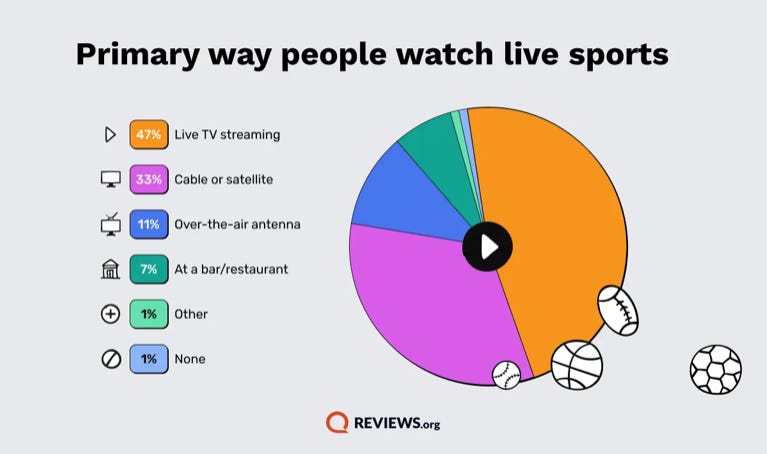
A Live Sports Viewership report finds that American households now spend an average of $1,475 per year to keep up with live sports with 84% of consumers still paying for primary TV (cable, satellite, or live TV streaming) and 71% layering on additional standalone sports streaming apps to catch all the games for their specific teams or leagues.
Independent sports journalist Joon Lee has repeatedly criticized the fractured broadcast schedule and the number of streaming services required to watch a single team's season (such as needing NBA TV plus a regional streaming subscription). He has calculated it costs $4,785 annually to be a sports fan. That figure includes a ticket for one NFL, NBA, MLB and NHL game; two jerseys and two hats; cable TV and high-speed internet; subscriptions for Amazon Prime, Apple TV+, HBO (or whatever it is called this week), Paramount and Peacock. (Joon’s total does not take into consideration that some ballparks and arenas now charge $8 for a hot dog.)
The cost, in reality, is higher if you also have a predilection for televised college sports (which I prefer over pro games).
After factoring the cost of my fancy TV aerial and a fully-insured handyman to secure it on the roof, I will still save hundreds of dollars annually — even if I watch only one sporting event per week.
Stay tuned.