The State of Control
The founders’ bet on federalism

The United States was born in 1776 arguing about power — who holds it, where it lives and when it goes too far. That argument never ended.
In our third episode of America at 250: Due Diligence, co-host Bill Bernardoni and I take a deep look at federalism: the founders’ bet that you could build a government strong enough to hold a nation together while keeping it accountable enough not to swallow it whole.
The extended podcast version of the latest episode is now online on the major platforms (Amazon, Apple, iHeart, Pocketcasts and Spotify to list a few), as well as beaming internationally this weekend on the Radio Free America transmissions via WRMI on shortwave. A slightly shorter AM/FM broadcast version airs throughout the week on 80 radio stations across the country, including WRCT in Pittsburgh.

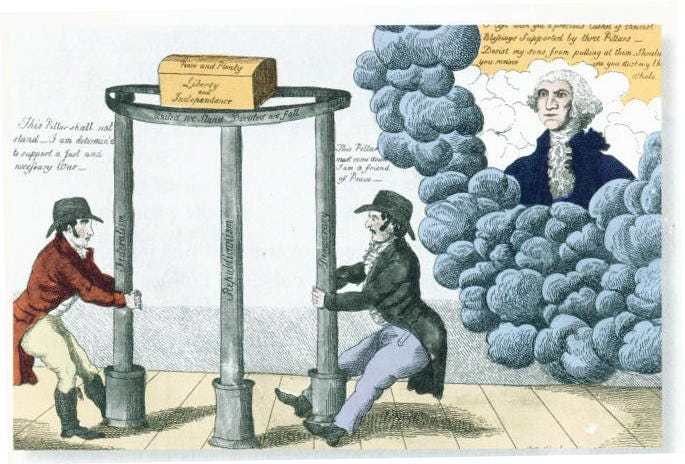
Georgetown University constitutional law professor Randy Barnett explains why the framers of the Constitution built a “compound republic” of competing sovereignties, what James Madison (originally quite the nationalist), who would become our fourth president, wanted and didn’t get, and how President Franklin Roosevelt’s New Deal rewrote the rules in ways that still govern us today.


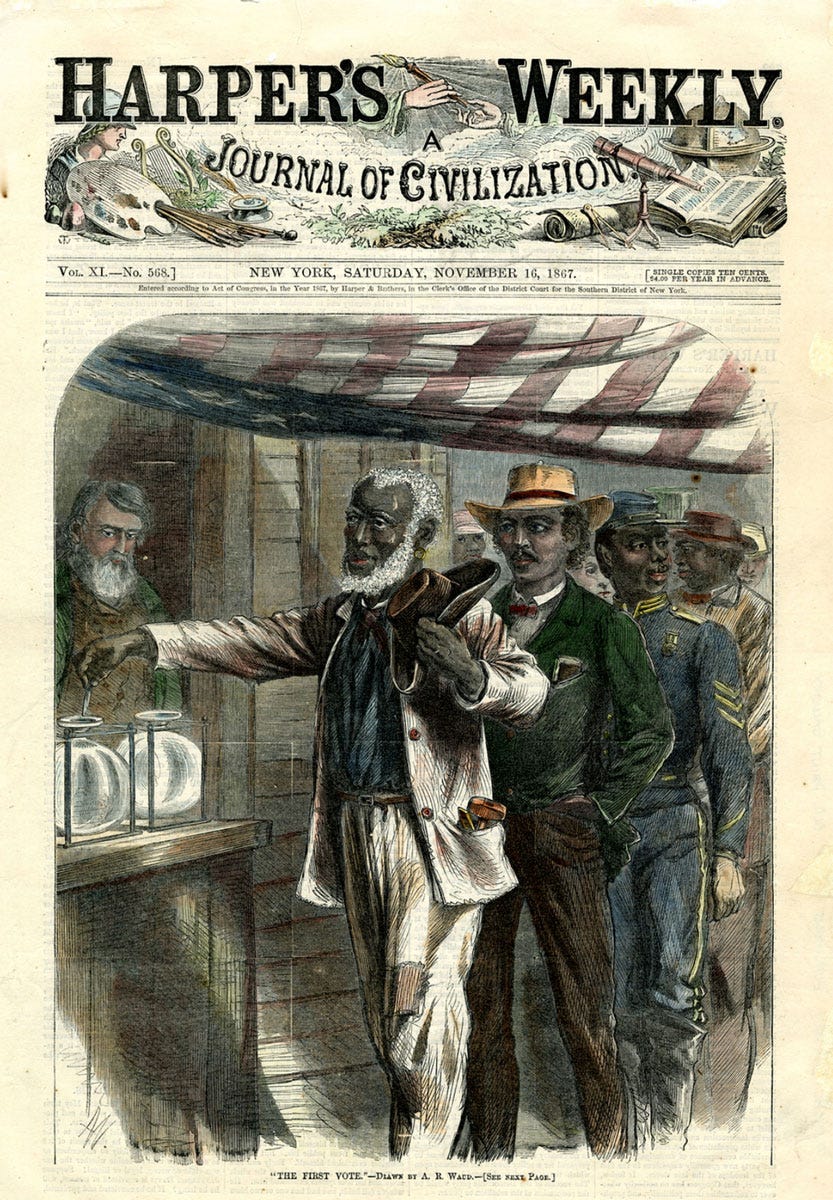
I sat in a studio at WUMS Radio to interview University of Mississippi political science and African American Studies professor Marvin King to examine what happens when states are trusted with rights they have historically denied. From the 15th Amendment to the recently hollowed-out Voting Rights Act to the landmark 2013 U.S. Supreme Court decision Shelby County v. Holder, Dr. King traces the gap between constitutional promise and lived reality — and asks a question worth pondering: without federal intervention (twice), when would Black citizens in Mississippi have voted?
Manhattan Institute constitutional lawyer and Supreme Disorder author Ilya Shapiro closes with a different concern — a federal government he argues has expanded so far beyond its enumerated powers that a Cleveland-area Little Caesar’s pizza shop robbery becomes a federal case under the interstate commerce clause. His prescription: a gradual rollback of accumulated federal authority and a return of real governing to the states.
Three guests, three entry points, one argument America has been having since 1787. This episode of America at 250: Due Diligence is not intended to settle it, but rather give listeners what they need to think it through.
Our acclaimed and unique limited-run (through the end of this year) radio program and podcast is made possible due to several generous individual philanthropists, as well as support from the Jordan Center for Journalism Advocacy and Innovation and our home base, the School of Journalism and New Media at the University of Mississippi. We do not accept money from any special interest groups for the programming.
Also, we do not charge radio stations to air the program and podcast subscriptions are free to achieve the widest possible audience. That said, since the program’s production and distribution incur a deficit, we encourage grassroots contributions.
The feedback we’ve received so far is encouraging and comments from some listeners note they do not agree with some of the positions taken by the guests, but they will continue to tune in. That is precisely what we hoped for and expected.
America@250 does not cater to the confirmation biases, meaning we avoid a bias to entice any one side of the deeply divided political spectrum. We feel it is important for the audience to hear from educated and articulate experts on different sides of a debate without rancor. America’s founders, for the most part, took a similar view and that led to the successful adoption of the United States Constitution and the initial 10 amendments enshrined in the Bill of Rights. The approached worked 250 years ago and we would like to extend it a little longer.