


President Trump’s promise to give every adult American $5,000, if his Republican Party retains control of Congress in November’s elections, reminds me of a political pitch in a similar vein that was similarly criticized as legally questionable.
I was a Nevada resident, although too young to vote in the state’s gubernatorial election of 1974. The popular incumbent, Democrat Mike O’Callaghan (whom decades later I would interview about his surviving losing a leg as a Marine during a sub-freezing Korean War battle), faced two general election opponents. Real estate developer Shirley Crumpler was the first Republican woman nominated for governor of any state. The more fascinating challenger was an independent, James Ray Houston. The election results were anti-climactic. Crumpler and Houston combined couldn’t outperform O’Callaghan, who took 67% of the vote. Noteworthy was the independent’s total was only a few thousands votes less than the Republican’s, even after Houston’s campaign was rocked by a last minute scandal.
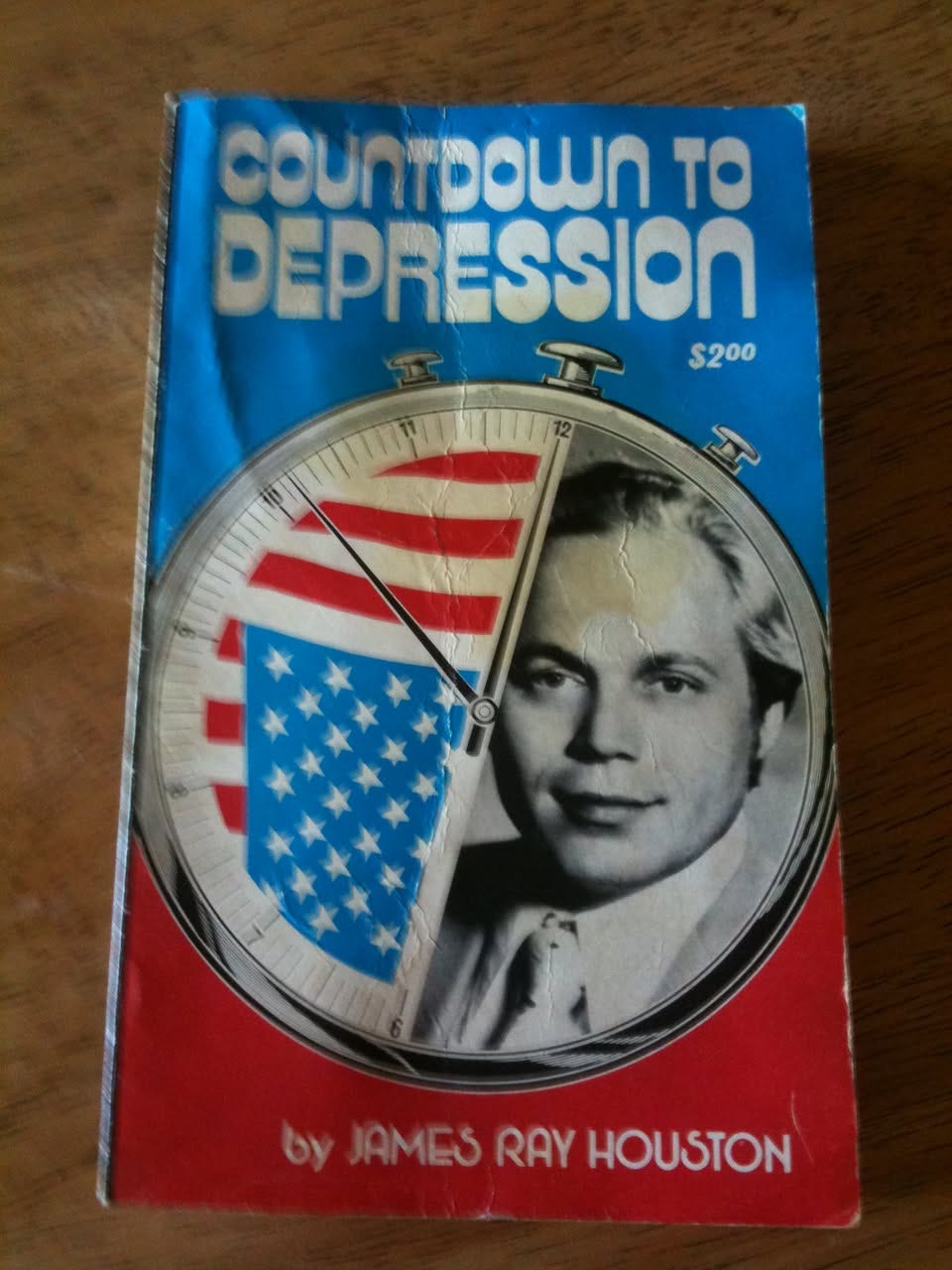
James Ray Houston received an invaluable amount of what a future novice politician would refer to as “earned media” because of his unique and controversial campaign promise in the Silver State. The blonde self-proclaimed Silver King (who claimed falsely he was a descendant of Texas legend Sam Houston) intrigued voters and the media with his pledge, if elected, to establish a dual monetary system backed by gold and silver, and use his purported massive holdings of precious metals to enrich Nevada's citizens. As a bonus Houston claimed his idea would combat inflation and serve as a hedge against a coming economic depression. Essentially, the American Independent Party candidate told the electorate that in exchange for their support, he would give them shares of stock in his mining and business ventures, offering each registered voter a direct equity stake or a portion of the profits.
Besides the possible violations of election law in what amounted to a creative vote-buying scheme, some Nevadans — not unaccustomed to hucksters relocating to their state of second chances — were more than dubious. Enerprising reporters, Louis Dolinar and Harold Hyman of the Las Vegas Sun, were among them. Houston’s head of security, Rodney Franklin, became a whistleblower, tipping off the newspaper that his boss wasn’t who he claimed to be. Houston had lied about being a decorated combat veteran. He had never been a covert government agent. And on and on. But the most significant revelation related to Houston’s scheme to bankroll his gift of assets to voters, which depended on his personal fortune of bullion. There were no riches. The vault was literally empty. His Western Pacific Gold & Silver Exchange was insolvent. His gubernatorial campaign was being funded by funneling investors’ money into election advertising and travel expenses.
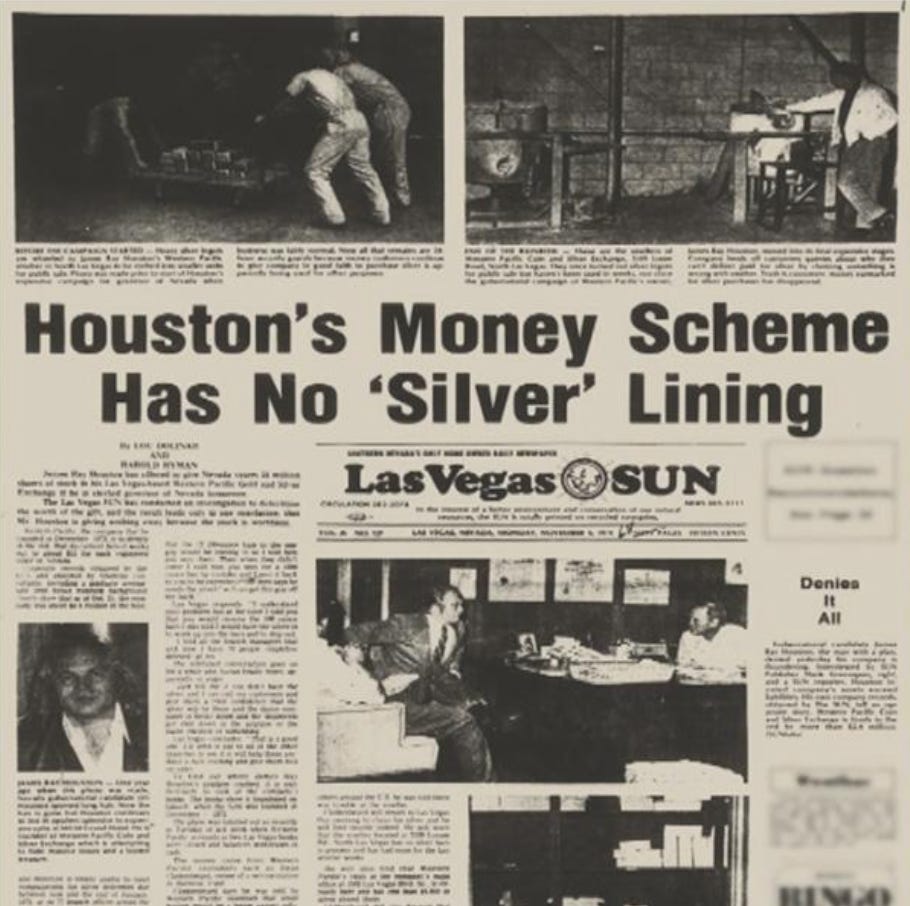
Despite the expose that the candidate was a conman, his inducement still lured 15 percent of those casting ballots. In other words, more than 26,000 people — even after learning that the candidate was a fraud — still voted for him.
Shameless, Houston sued the newspaper which had exposed him as a liar and a crook and, of course, lost.
According to Rodney Franklin, the independent candidate never expected to win but believed a respectable finish — maybe even beating the Republican contender —would enhance his credibility, allowing him “to create other scams down the line.”
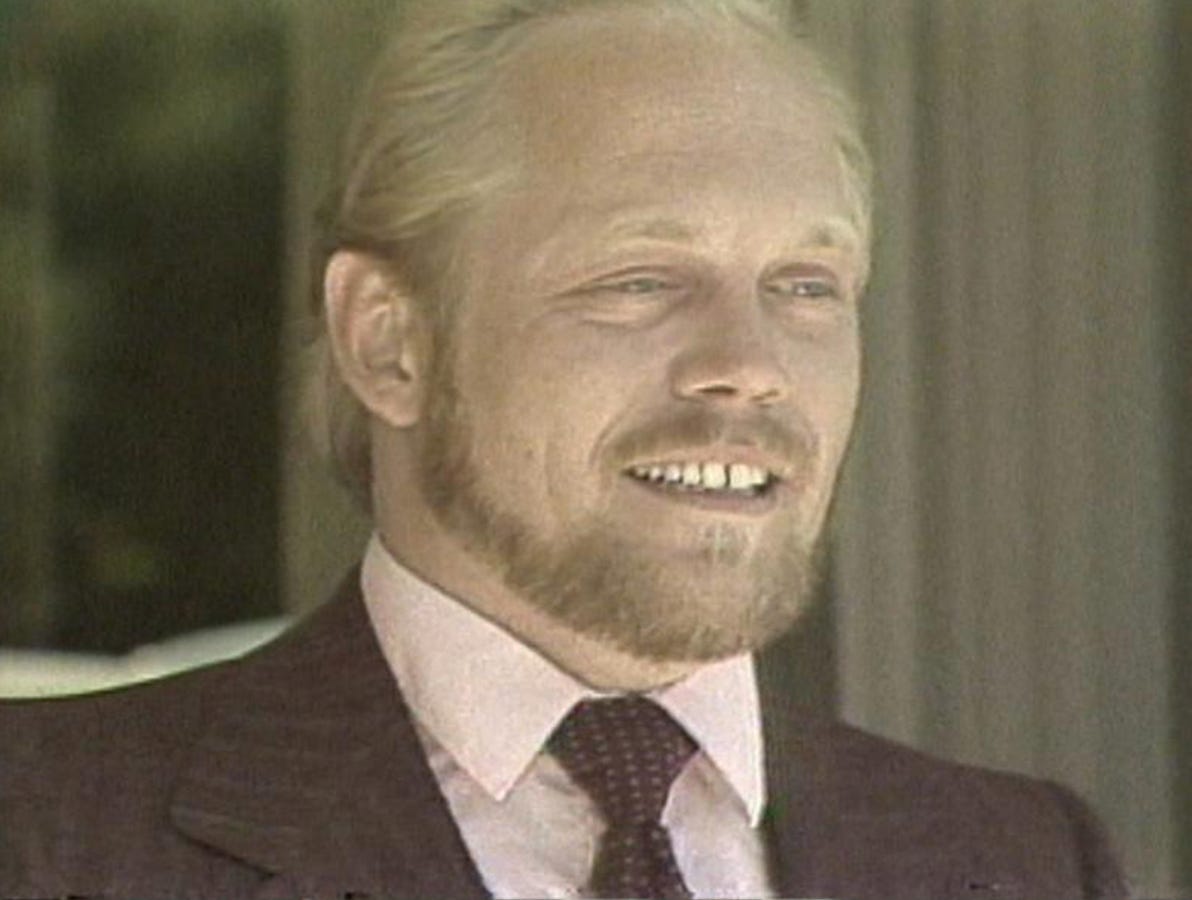
James Ray Houston would be indicted for running a Ponzi scheme, become a fugitive, get captured, put on trial in federal court and be acquitted. I covered some of this drama as a young reporter in Las Vegas. Houston returned to the money game and duped new investors. The Great Western Penny Exchange! The Metric Monetary Mint! He would subsequently be indicted for mail fraud related to one of his numerous new schemes and finally convicted. Even as late as 2011, Houston was again in the criminal justice system resulting from a global lottery scam he had run from Costa Rica, primarily targeting millions of senior citizens in North America.
Houston died in 2012, about a year into his 10-year sentence at Terminal Island in California, unrepentant until the end.
Hey Steve, Lou Dolinar here. I'm the guy with the byline on the Sun, and that's the back of my head in the photo. Lets talk.
Wow, what a great story! I arrived too late in '77 but I did get to interview Gov. O'Callaghan, who picked up the phone himself and was personable and patient with this obviously beginner reporter.